
To many homeowners, any grass that doesn't look like the Kentucky bluegrass sod that they had when the lawn was new is a weed grass - many call that weed grass "Crabgrass". Actually, there are several undesirable grasses that can invade the home turf.
Crabgrass has run rampant in many lawns during the last few summers. Crabgrass is an annual; each autumn it dies but each spring it comes up from seed. It germinates starting in June. By the time it is noticeable, you see short, light green grasses along the driveway or walkways and in the thin areas of the lawn. It grows quickly and before long it spreads out flat, often smothering the existing grasses. The leaves are now distinctly hairy and long seed heads develop. As it gets cooler in September the crabgrass turns purple. Later it dies and by spring it is gone. Crabgrass plants, however can produce thousands of seeds,
Crabgrass likes warm, dry soils in order to germinate. This is why it is often found along the edges of walks and driveways. The concrete or asphalt absorbs the sun's heat and this warmth is transferred to the soil next to the hard surfaces. In addition, there may be extra gravel along the edges of walks and drives which causes the soil to heat up and dry out more than it would if there was proper soil along the paving.
This also means that crabgrass will invade lawn areas that are thinner than they can be. Thin lawns allow more sun to penetrate to the soil, thus warming the soil and creating conditions that crabgrass likes. Sometimes the thin areas have been damaged from insect problems. In these cases, the crabgrass is a result of the insects.
Control of Crabgrass: crabgrass will die in the winter but here are some things to help reduce crabgrass germination
- A healthy, thick lawn will naturally crowd out crabgrass. Regular feeding and aeration help to develop thick lawns to discourage crabgrass and other weeds.
- Mow the lawn at 3 inches high. Longer grass blades provide more shade to the soil and keep it cooler, reducing crabgrass germination
- Do not trim the lawn too short along the drive or walkway edges
- Water deeply once a week (on average) rather than every other day.
- Products are available that reduce the germination of seedlings in the spring.
- If necessary, resod bare spots.
- Re-seeding will also thicken the lawn. Add grass seed in the fall (as early as late August). Fall is the best time because crabgrass treatments can interfere with lawn seed germination. (Normally we avoid putting crabgrass controls on newly seeded areas so as not to damage grass seedlings. Of course, without the control, crabgrass may sprout in these areas). The new seed will fill any spots left thin by the crabgrass. Add the seed even before the crabgrass dies; the crabgrass will protect the newly germinating grass plants.
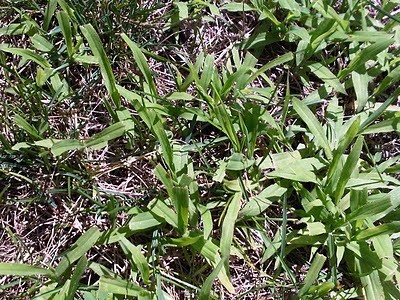
Crabgrass - only a few weeks old
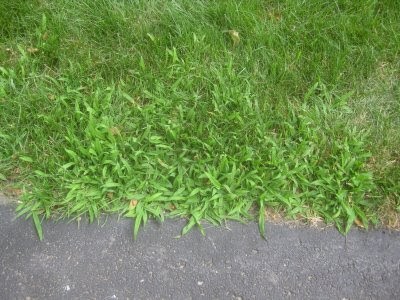
Middle aged crabgrass starting to spread over the edge of the drive.
For a photo of maturing crabgrass click here
If you have a lawn/tree/shrub that needs some Tender Loving Care- get The KING OF GREEN:
or call us at 905.318.6677 or 1.888.TURFKING (887.3546)
If you would like more information, please Contact us
Follow us on Twitter http://twitter.com/turfkingofgreen
Copyright 2012 Turf King-Hamilton. All Rights Reserved.