
Spring Is Here

Snow Mold
This spring there was a fair amount of snow mold on the lawns. The term "Snow Mold" refers to lawn diseases that occur primarily from late fall to mid-spring. Snow Mold or Snow Mould appears as a fluffy white, pink or grey residue that seems to follow the retreating snow line. Cool, wet conditions with or without snow cover cause this disease to flourish.

A properly fertilized, well-maintained lawn is most resistant to damage from snow mold. A vigorous raking in early spring through the snow mold residue will help reduce this disease and quicken the turf grass healing process.


Rake, Rake, Rake Your Sod (sung to the tune of Row, Row, Your Boat)
The warm sunny rays of the sun seem to drive folks out onto the lawns to rake the grass. Is all that exercise and fresh air of any value?
Yes of course. Plus the lawn can benefit too.

Raking will remove the dead grass blades. This improves air circulation around the crowns of the turf. Better air movement will reduce disease spread and allow the crowns to warm up. As the grass and soil warm up, the plants will start to grow and as they grow they will turn green.

The raking will also sever some grass roots. This is in effect a pruning operation. Whenever a plant stem or root is cut, it stimulates the plant to send out more roots or stems. BTW, the pruning of the roots of certain grasses like Kentucky blue grass is really a pruning of stems. Kentucky blue grass spreads by its underground parts, which are technically stems.

The removal of the dead grass (some people call it “thatch”) will also improve the appearance of the lawn. Even if you rake out some of the green grass blades, less dead grass means the lawn will look greener. (Similar to when I pull the grey hairs out of my head. Pull out enough grey hairs, you will look younger?!)

Is raking required? Well, for all the reasons listed above, raking will improve the lawn but for some people with large lawns, or those like me who tend to be lazy, raking can be skipped. It just means your lawn will take a little longer before it turns green.

One way of helping it to turn green without raking is to drag out the lawn mower, set it at about 1 ½ inches and mow the lawn early in the spring. This is the only time you should mow the lawn this low (at least until the last cut in the late fall.)

This will remove up to half of the dead grass blades. Not in number but in height. The benefit is that the new green grass growing from below will show up quicker. Also the grass will start to grow sooner as the lower turf will allow the soil to warm up faster.


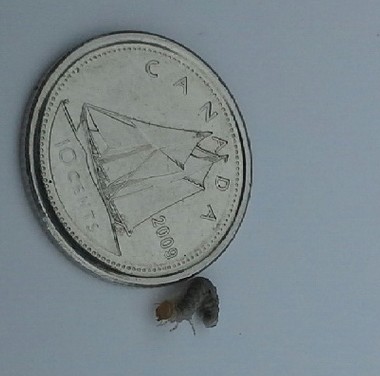
What do I do if I find white grubs in the spring?

Normally, I am not a fan of doing any grub treatment in the spring. Most of the damage to the lawn by grubs is done in the fall. By this time of year, they are not feeding very much. Secondly, they are harder to control because they are larger now and it takes more to kill them than it does in the fall.
 
Therefore, getting rid of the grubs now won't undo the damage already done, and it won't likely stop any damage from marauding skunks, raccoons or birds. Any treatments will take some time to work and until the grubs have died, they are still tasty snacks for the wildlife.

Nematode treatments in the spring are iffy until the soil temperatures reach 14°C. Usually by that time it’s not worth applying them. Now some companies want to apply nematodes in the spring, but I think that it is not worth the cost for a treatment that is not likely to be effective.

The other issue with controlling grubs now is that the adult grub is a flying beetle. Even if we could rid your lawn of the grubs there now, it would only mean that there would be fewer adults flying around in your neighbourhood. This is great for your neighbourhood as a whole, but not necessarily of any benefit to you and your lawn. Since the adults fly, they could fly into the air, perform their mating exercises, then look around to see where to lay their eggs.

"There's a nice lawn.  Let me put my eggs there, so that my baby grubs have a nice lawn to chew on." Those adults could have come from down the road or across the street to lay eggs on your lawn.

So at this stage, repair the damage, add soil, grass seed or repair the damage with some sod. Feed the lawn to encourage it to repair itself, then treat for grubs this summer.

That summer treatment is to prevent damage from the next generation of grubs - those baby grubs that are small and hungry. They are apt to feed voraciously in order to grow into bigger grubs. Those baby grubs are the ones that feed on your grass roots and destroy the lawn.

Open Mondays to Fridays
Closed Saturdays
 

Call 905.318.6677

1.888.TURFKING

(888.887.3546)